
Hormone Therapy & Hair Health
Markham & North York, Ontario
A meaningful share of hair loss is hormonal or nutritional rather than something happening on the scalp — thyroid function, androgens, iron stores or vitamin status. These show up in blood work, and many of them are treatable.
Where a prescription medication is the right answer instead, that is handled by our physician, because in Ontario a naturopathic doctor cannot prescribe those. Having both under one roof is the point.

Hair loss is often influenced by internal biological factors such as hormonal imbalance, stress, inflammation, nutritional deficiencies, and metabolic health.
At DrHairs, we take an integrative approach to hair restoration that combines modern medical treatments with naturopathic therapies designed to support the body’s natural balance.
Our naturopathic services focus on identifying underlying health factors that may contribute to hair thinning and supporting the body’s natural ability to maintain healthy hair growth.
The panel
The blood tests most commonly used to investigate hair loss are ferritin with iron studies, a complete blood count, thyroid function (TSH and free T4), vitamin D, vitamin B12, folate, zinc, and — where the history calls for it — androgen and pituitary hormones.
No single result explains hair loss on its own. What matters is the pattern across several markers, read against your symptoms, medications, menstrual history and how the shedding actually started.
| Marker | What it measures | Why it matters for hair |
|---|---|---|
| Ferritin, serum iron, TIBC | Iron stores and transport | Low iron stores are among the most common treatable contributors to shedding, particularly in menstruating women |
| CBC | Red and white cell counts | Identifies anaemia and other systemic findings |
| TSH, free T4 | Thyroid function | Both underactive and overactive thyroid can push hair into shedding |
| 25-OH vitamin D | Vitamin D status | Involved in the follicle growth cycle; deficiency is common in Ontario winters |
| Vitamin B12, folate | Nutritional status | Deficiency can accompany diffuse shedding |
| Zinc, selenium | Trace minerals | Both deficiency and excess have been associated with hair changes |
| Total testosterone, free testosterone, SHBG | Androgen levels and binding | Relevant where pattern thinning appears alongside other androgenic symptoms |
| DHEA-S | Adrenal androgen | Considered in suspected PCOS or adrenal causes |
| Prolactin, LH, FSH | Pituitary and ovarian hormones | Considered where cycles are irregular or absent |
These tests can reveal treatable contributors. They cannot diagnose every type of hair loss — classic pattern hair loss often returns entirely normal results, which is itself useful information. For the types and causes of hair loss more broadly, see our page on hair loss.
The number people ask about
Many clinicians working with hair loss look for a ferritin level above roughly 40 to 70 µg/L, rather than simply within the laboratory’s reference range. A result can be reported as technically normal and still sit lower than is ideal for hair.
This is worth being careful about. There is no single agreed threshold in the research, laboratories define their normal ranges differently, and ferritin also rises with inflammation — so a normal-looking figure does not always mean iron stores are adequate. That is why iron is assessed alongside serum iron, TIBC and a CBC rather than on its own.
Raising iron stores takes months, not weeks, and correcting a deficiency helps only if that deficiency was actually contributing. It will not reverse genetic pattern hair loss.
Chasing one low-normal number rarely brings hair back on its own. Iron matters when it is genuinely low and genuinely part of the picture. If your ferritin is fine and your pattern is genetic, more testing is not the answer — and we will tell you that.
Who you actually see
Most clinics offering this can do one half of it. A naturopathic clinic can assess your internal health but cannot prescribe hair loss medication or perform restoration treatment. A hair transplant clinic can operate but rarely investigates what is happening internally. We do both, and we are clear about which practitioner does what.
Naturopathic care
Naturopathic Doctor
Carries out the hair health consultation: full history, scalp and hair assessment, lab requisition where indicated, interpretation of results, and a written plan covering nutrition, supplementation where a deficiency is identified, and lifestyle factors.
In Ontario, naturopathic doctors are regulated by the College of Naturopaths of Ontario and work within a defined scope of practice.
Verify on the CONO public register →Medical care
Physician
Where a prescription medication is appropriate — finasteride, oral or topical minoxidil, or spironolactone in selected cases — that decision and prescription sit with the physician. A naturopathic doctor cannot prescribe these in Ontario.
The physician also carries out surgical assessment and performs hair transplant procedures.
Verify on the CPSO public register →Each practitioner works within their own regulated scope. Naturopathic care does not replace medical assessment, and neither replaces care from your family doctor. Where something we find needs a physician or a specialist, we will say so.
What testing can find
Yes. Hormonal hair loss is real and common. Shifts in androgen or reproductive hormones, an underactive or overactive thyroid, and depleted iron stores are all recognised contributors to shedding — and all three are visible on blood work.
The most common testable contributor we see, particularly in women with heavy periods, restricted diets, or a history of pregnancy. It often presents as diffuse shedding across the whole scalp rather than a receding pattern, and frequently comes with fatigue or breathlessness.
Both hypothyroidism and hyperthyroidism can push hair follicles out of their growth phase. Look for shedding alongside fatigue, weight change, cold or heat intolerance, dry skin, brain fog or changes in bowel habit. Thyroid medication itself can occasionally contribute.
Relevant where thinning follows a pattern at the crown or part line and appears alongside irregular cycles, acne or unwanted facial hair. PCOS is the most common underlying cause in this group.
Vitamin D, B12, folate and zinc are assessed because deficiency in any of them can accompany shedding — particularly after rapid weight loss, restrictive eating, or gastrointestinal conditions affecting absorption.
A significant number of cases turn out to follow a medication change, an illness, surgery, a fever, or a period of severe stress two to three months earlier. This delayed shedding pattern is called telogen effluvium, and it often resolves once the trigger passes. We cover it and the other types of hair loss on our hair loss page.





Naturopathic hormone therapy focuses on supporting the body’s hormonal balance through natural and integrative approaches.
These approaches may help create a healthier biological environment for hair follicles.
Depending on the patient’s condition, naturopathic support may include:

At DrHairs, naturopathic services may support overall hair health by addressing internal factors that influence hair growth.
Addressing these internal factors may improve the effectiveness of other hair restoration treatments.
These services may include:



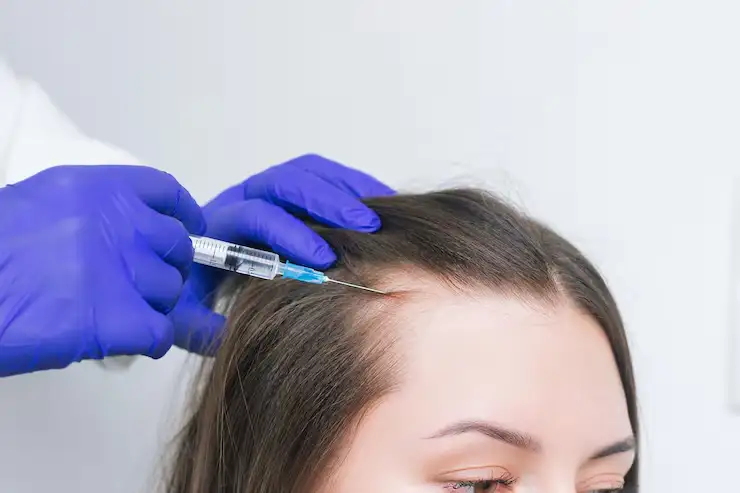
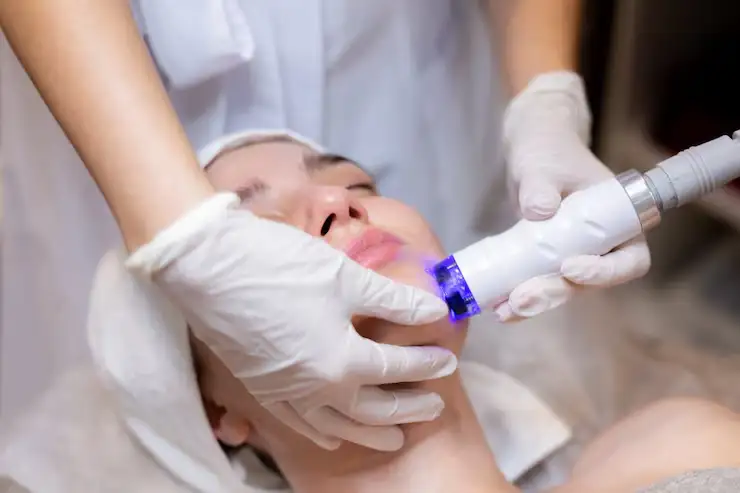
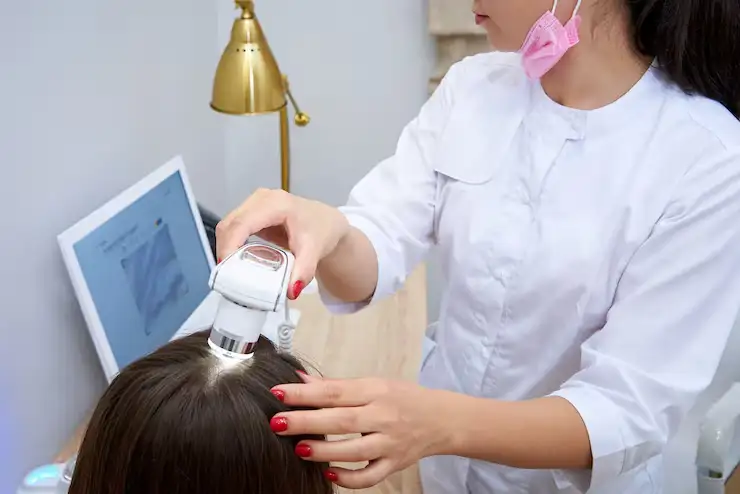
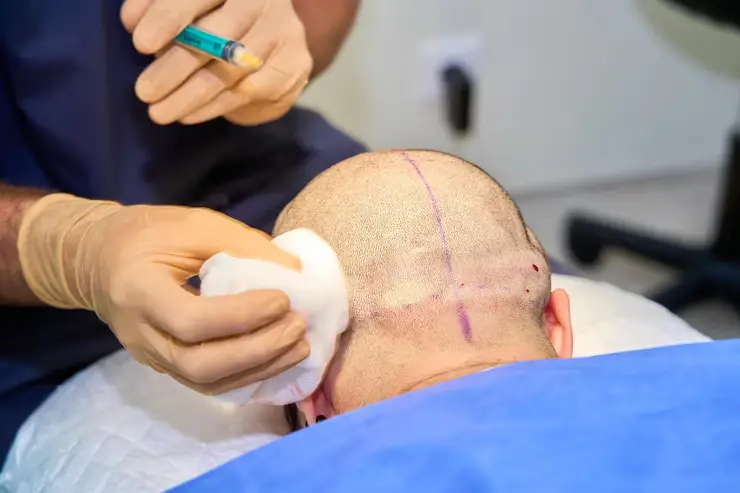
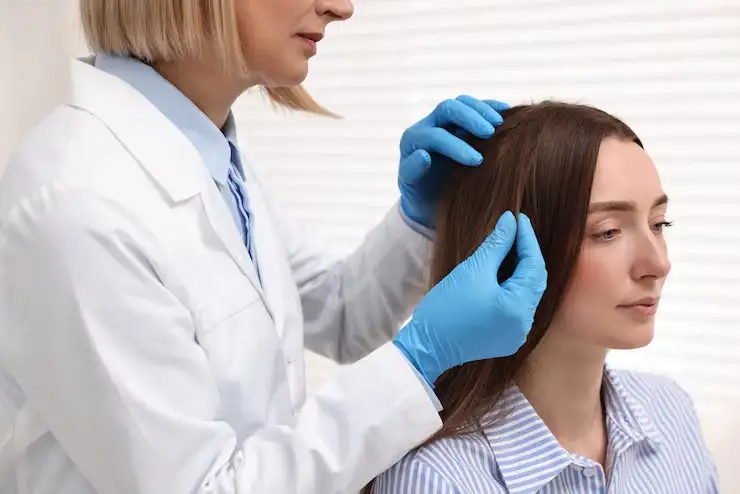
Hair restoration is most effective when both external treatments and internal health factors are addressed.
This integrative approach allows us to address both the symptoms and underlying causes of hair loss.
At DrHairs, naturopathic therapies may be integrated with advanced hair restoration treatments such as:
Cost
A naturopathic hair health consultation is $149. Follow-up visits are $89. Both are available at our Markham and North York clinics, and no referral is needed.
Laboratory fees are charged separately by the laboratory and are not included above.
Some clinics offer a free introductory call instead. We would rather charge for a full consultation and give you a written plan and a lab requisition at the end of it than give you fifteen free minutes and a booking form.
Sometimes. In Ontario, Canada, when blood tests are ordered by a physician and are medically indicated, many standard markers such as ferritin, CBC and TSH are covered. Tests ordered by a naturopathic doctor are generally not covered, and some markers are not covered regardless of who orders them.
We will tell you at your consultation which route applies to your situation, and where a physician-ordered panel makes more sense than a private one. The free hair and scalp assessment is separate and always free at both clinics.
Women
Hormonal hair loss in women is more often diffuse than patterned, and more often driven by something testable. That is why assessment matters more here than anywhere else — treating the hormonal picture usually does more than treating the scalp.
Heavy shedding two to four months after giving birth is extremely common and usually settles on its own between six and twelve months. It becomes worth investigating if it is still going beyond a year, if it is unusually severe, or if iron stores were low during pregnancy — which is frequently the case.
Polycystic ovary syndrome can cause thinning at the crown and part line alongside irregular cycles, acne or unwanted facial hair. Testing typically looks at androgens, SHBG, DHEA-S and glucose or insulin markers. Treating the underlying picture matters more than treating the scalp.
Falling oestrogen changes the balance between oestrogen and androgens, which can shift hair into a thinner, shorter growth cycle. Thyroid changes and lower iron stores often arrive in the same window, which is why they are assessed together rather than assumed.
One of the most common findings and one of the most treatable. Correcting iron stores takes months, and it works only where iron was genuinely part of the problem.
Thyroid conditions are considerably more common in women, and hair shedding is a frequent early sign. TSH and free T4 are part of the standard panel for this reason.
Men
It depends on the pattern. Classic recession at the temples and crown is usually genetic, and blood work in that situation is normally unremarkable. Diffuse shedding across the whole scalp is a different picture and does justify testing.
Testing is worth doing where the loss is diffuse rather than patterned, where it started suddenly, where it follows an illness, medication change or period of significant stress, or where it comes with fatigue, weight change or other systemic symptoms.
Where the pattern is straightforwardly genetic, the honest answer is that internal testing will not change much — and the conversation should move to what actually treats it.
Straight answer
Only when they are correcting a deficiency you actually have. If your levels are already adequate, taking more of a nutrient does not generally produce more hair, and the evidence behind most over-the-counter hair supplements is weak.
Biotin is the clearest example. Biotin deficiency does cause hair problems, but genuine deficiency is uncommon in people eating a normal diet. In everyone else, supplementing it has not been shown to improve hair — and it interferes with laboratory testing, which we cover below.
The same caution applies to collagen products, multi-ingredient hair formulas and high-dose combination supplements. Some contain nutrients that cause problems in excess rather than deficiency. Selenium is one; too much is associated with hair loss, not less of it.
This is why we test before we recommend anything. A supplement plan built on actual results is worth taking. One built on a guess is usually an expensive way to produce nothing.
When medication is the answer
Where hair loss is driven by genetics rather than a correctable deficiency, prescription medication has more evidence behind it than any supplement. In Ontario these must be prescribed by a physician, which is why our medical and naturopathic sides work together rather than separately.
Topical minoxidil has the strongest evidence base of the options available, and works gradually over three to six months. Finasteride is used in men. Low-dose oral minoxidil and spironolactone are considered in selected patients, with monitoring. All of them require a proper assessment first, all carry potential side effects, and all need to be discussed with a physician who knows your history.
They also share one thing with every other treatment: they work while you take them. Stopping generally means losing the benefit over the following months.
If medication turns out to be the right route for you, that discussion happens with our physician at the same clinic, without another referral and another wait.
Limits
Testing is useful when there is something to find. A meaningful number of people who come to us for it do not need it, and we would rather say so at the consultation than run a panel that changes nothing.
In those situations we will point you toward the treatment options that actually apply rather than take payment for a panel that will come back clear.
Before your test
The single most important step is to stop high-dose biotin supplements 48 to 72 hours before your blood draw. Biotin interferes with many thyroid and hormone immunoassays and can produce results that look abnormal when they are not, or normal when they are not.
That matters more than most people realise, because biotin is in almost every over-the-counter hair, skin and nail product. If you are taking one, tell whoever orders your test.
A test done under the wrong conditions is worse than no test, because it produces a number someone may then act on.
Where this fits
Correcting an internal cause protects the hair you still have. It does not restore hair already lost to genetic pattern thinning — and restoration treatment does not fix a deficiency that will keep undermining it.
Which is why both usually belong in the same plan. See PRP therapy, hair transplant, or compare all the options.
Where to find us
The hair health consultation is offered at both locations. Come to whichever is easier to reach.
York Region
7080 Warden Avenue, Unit B3
Markham, Ontario L3R 1S2, Canada
Where: Warden Avenue just north of Steeles Avenue East, near Pacific Mall and First Markham Place
Driving: Minutes from Highway 404 and 407 · free on-site parking
Transit: YRT Warden route · Milliken GO Station nearby
Hours: Mon–Fri 9:00am–6:00pm · Sat 10:00am–4:00pm
City of Toronto
Centerpoint Mall, 6464 Yonge Street, Unit 116
North York, Ontario M2M 3X4, Canada
Where: Inside Centerpoint Mall at Yonge Street and Steeles Avenue West
Driving: Short drive from Highway 401 · free mall parking
Transit: TTC Line 1 to Finch Station, then north on Yonge
Hours: Mon–Fri 9:00am–6:00pm · Sat 10:00am–4:00pm
Patients travel to us from Markham, Unionville, Milliken, Berczy Village and Cornell; from Willowdale, Newtonbrook, Bayview Village and Bathurst Manor in North York; and from Richmond Hill, Thornhill, Vaughan, Scarborough, Agincourt, Aurora, Newmarket and Stouffville.
Naturopathic hair health services may benefit individuals who:
A professional consultation helps determine the most appropriate treatment strategy.
The Dr.Hair Advantage
At DrHairs, each patient begins with a detailed consultation evaluating:
Leverage a world-renowned name in elite sports medicine and high-performance medical recovery.
Access proprietary evidence-based treatment frameworks and optimized multi- stage recovery cycles.
Full-stack EMR integration, global supply chain management, and ongoing staff certification modules.
Comprehensive staff training programs enhance skills, productivity, engagement, and organizational performance.
Full-stack EMR integration, global supply chain management, and ongoing staff certification modules.
Questions
The tests most commonly used are ferritin with iron studies, a complete blood count, thyroid function (TSH and free T4), vitamin D, vitamin B12, folate and zinc. Where the history calls for it, androgen and pituitary hormones such as testosterone, SHBG, DHEA-S, prolactin, LH and FSH are added.
Many clinicians working with hair loss look for a ferritin level above roughly 40 to 70 micrograms per litre rather than simply within the laboratory reference range. There is no single agreed threshold, and ferritin also rises with inflammation, so it is assessed alongside serum iron, TIBC and a complete blood count rather than on its own.
A naturopathic hair health consultation is $149 and follow-up visits are $89, at both our Markham and North York clinics. Laboratory fees are charged separately by the laboratory. The hair and scalp assessment is free and separate.
Sometimes. When tests are ordered by a physician and are medically indicated, many standard markers such as ferritin, CBC and TSH are covered in Ontario. Tests ordered by a naturopathic doctor are generally not covered, and some markers are not covered regardless of who orders them.
Hormonal hair loss is shedding or thinning driven by a change in hormone levels rather than by damage to the scalp. Common causes include thyroid dysfunction, raised androgens as seen in PCOS, and the hormonal shifts of pregnancy, postpartum recovery, perimenopause and menopause. Most of these are visible on blood work and many can be treated.
Yes. Both an underactive and an overactive thyroid can push hair follicles out of their growth phase and cause diffuse shedding. Thyroid function is assessed with TSH and free T4 as part of the standard panel.
Postpartum shedding usually begins two to four months after birth and settles on its own between six and twelve months. It is worth investigating if it continues beyond a year, is unusually severe, or if iron stores were low during pregnancy.
Only when they are correcting a deficiency you actually have. If your levels are already adequate, taking more of a nutrient does not generally produce more hair, and the evidence behind most over-the-counter hair supplements is weak. This is why we test before recommending anything.
Yes. High-dose biotin should be stopped 48 to 72 hours before a blood draw unless a clinician advises otherwise. Biotin interferes with many thyroid and hormone immunoassays and can produce misleading results. It is present in most over-the-counter hair, skin and nail supplements.
No. In Ontario those prescriptions must come from a physician. At DrHairs the naturopathic doctor carries out the internal assessment, and where prescription medication is appropriate that discussion takes place with our physician at the same clinic.
It can often be improved by treating the underlying condition rather than the scalp alone. Assessment typically looks at androgens, SHBG, DHEA-S and glucose or insulin markers, and treatment is directed at the wider hormonal picture.
No. You can book directly with either clinic by phone or online.
Yes. The hair health consultation is offered at both our Markham clinic on Warden Avenue and our North York clinic inside Centerpoint Mall at Yonge and Steeles.
Start here
Before treating hair loss, it is worth knowing whether something internal is contributing — and whether it is something that can be corrected. The hair and scalp assessment is free at both clinics. The naturopathic hair health consultation is $149.
This page is general health information, not medical advice, and is not a substitute for assessment by a qualified practitioner. Reference ranges and thresholds vary between laboratories. Naturopathic care does not replace medical care or care from your family doctor. Individual results vary. Prices are in Canadian dollars.
We use cookies to improve your experience on our site. By using our site, you consent to cookies.
Manage your cookie preferences below:
Essential cookies enable basic functions and are necessary for the proper function of the website.
These cookies are needed for adding comments on this website.
Google reCAPTCHA helps protect websites from spam and abuse by verifying user interactions through challenges.
These cookies are used for managing login functionality on this website.
You can find more information in our Cookie Policy and Privacy Policy.
Discuss your hair concerns and find the best treatment for you.